Saturday, November 25, 2006

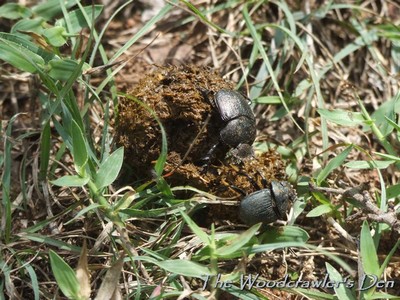
Dung ball heros - a beetle battle

Dung beetles come in two varieties, the hard working types and lazy bums. Hard working beetles locate their target by a strong sense of smell. Once located, they pull off chunks of the mess and roll it into balls, a job usually done by the male watched by his partner. Ball is then rolled straight off to a desirable location by the amorous couple who then use it as food cum breeding chamber.


Once in a while a lazy bum lies in ambush, especially while the female is not around. The male intent on rolling the ball in a straight line despite any obstacles. The bum tries to take advantage of this obsession and some times succeeds but often has to be content with a small chunk of the ball.


Thursday, November 02, 2006

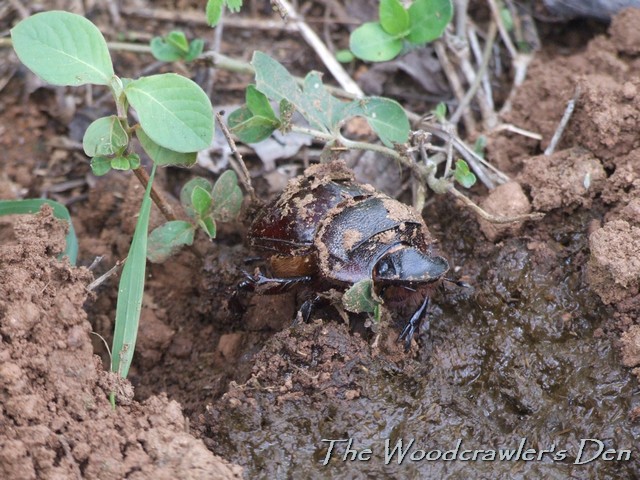
I'm a dung beetle & that mess is my food!

Strolling around in a scrub jungle has certain advantages, and disadvantages. It puts you close to the action and gives a grandstand view of the happenings in the undergrowth. Of course, it also makes you a tempting target for thorn's, bugs and leeches. In the preoccupation to avoid the latter we may miss some interesting things closer to the ground.


The dung beetle maybe an uninteresting creature and to many of us the porcine equivalent of the insect world because of it's habits. Let me assure you, a closer look will halt you in your tracks. It is an enterprising creature and will fight to keep its mess ..... Er! I mean it's prize.


Dung beetles are classified into rollers, (the one in the picture) tunnelers & dwellers. Rollers simply roll the dung into balls and roll them off to the to use as food or a brood chamber. The tunnelers bury the dung where the find it and the dweller s simply live in dung (Yuck!)


Monday, October 23, 2006

Part - 1: Warming Up


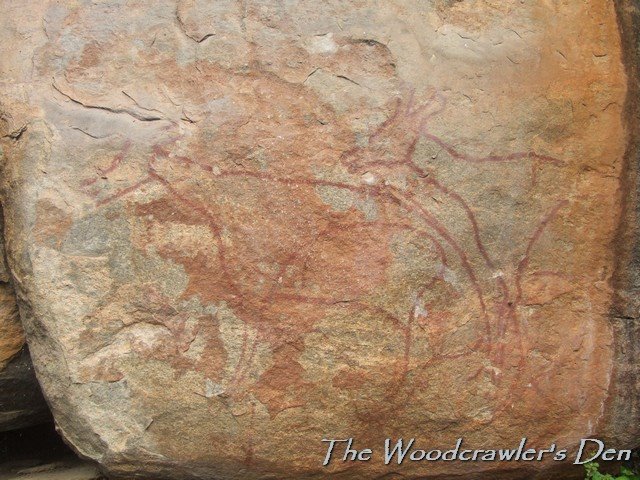
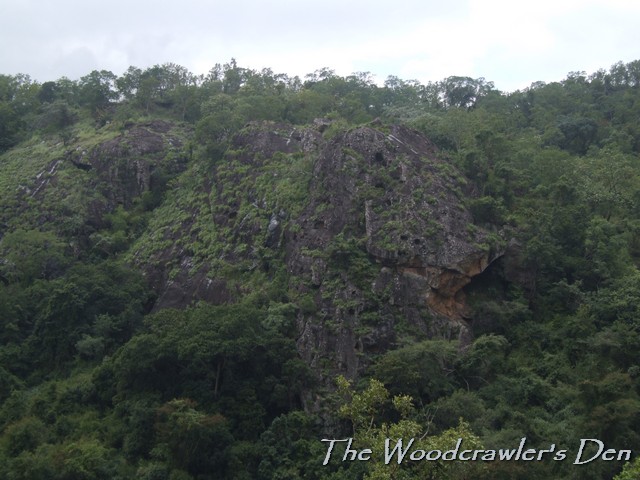
I knew I was not made for hard-core trekking but I knew I could manage without giving up if the start was perfect. For someone who has only walked on flat tarmac scrambling over loose rock in search of some prehistoric (?!) rock painting and burial sites was a new experience.

My trekking guide was Muthuswamy, a Veerappan look alike but without the trade mark whiskers. He told me the site was half a kilometer over a gentle slope and would take an 'easy' fifteen minutes to reach.


As we started climbing Muthuswamy realizsed quickly that his assessment of 'easy' was rather misplaced in my case. "Ukkaranuma Saar?" (Do you want to sit, Sir?), he queried, looking very concerned. He must have thought I was having a heart attack the way I was gasping. I reassured him and quickly started snapping pictures. My ego did not permit me to accept defeat. If I sat, he would know. Despite protests from my knees I resolutely kept pace. I was determined to see this to the end.


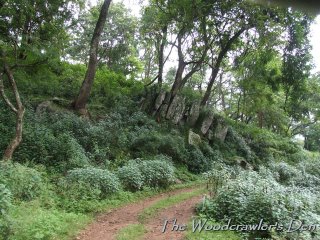
Finally, when I reached the spot I was soaking. Aching joints & twitching muscles are all forgotten as soak in the view. The experience is incomparable, well worth breaking into sweat and panting for. Then, after the momentary sense of light headedness the exhilaration takes over.

Discovering my feet...... literally


We all have two legs with the feet attached at one end. We are never conscious of them except when they hurt. They take us from point A to point B without ever letting us know that we are putting out entire weight on them. That is, when we walk on familiar ground.


When we are forced out of our environment we become acutely conscious of them because our surrounding dictate our reactions. For city slickers it can become an unpleasant surprise if we are not too careful with them, like yours truly discovered over the weekend.


Of course, the experience of 'discovering my feet' was exhilarating. It took me over hills, down into the valley, through the scrub, along the river and back to my car without ever protesting at the ill treatment it got. Confined to a heavy boot and soaking in sweat would not have been what their idea of a wilderness holiday but at the end of the day we congratulated each other and decided to do it more frequently.

Prologue - Woodcrawling along 'Little River'

A middle aged man with a generous middle is not the ideal profile for a trekker but the temptation was too great. So, with a prayer on my lips I have set forth on what appears to be a long journey of discovery.

I have never trekked before. Most wildlife parks do not allow people to saunter around and disturb the jungle folk but there are exceptions. On the Udumalpet - Munnar road, straddling the Tamil Nadu - Kerala border lies a patch of wilderness that is just being discovered. The Chinnar (literally translated - 'little river') wildlife sanctuary on the Kerala side of the border is contiguous with the Indira Gandhi WLS in Tamil Nadu. The check post used to be closed after 6 PM earlier but now it's kept open all through due to the heavy tourist traffic. The road used to be famous for encounters with elephants and gaur grazing beside it.


My interest was the result of what was a wasted trip. We had driven to Munnar on a weekend to try to get a glimpse of the elusive Kurinji. We did not know that disappointment was in store as the heavy traffic caused a jam on the road and an endless que at the entrance to the Eravikulam NP. We had time to kill but nowhere to go and as we drove downhill we looked more closely at the signboards put up by the Kerala Forest Department.


We had, earlier, stopped for breakfast while going uphill. Then we had seen a herd of gaur on the ridge across road also having their breakfast. So when we halted at the check post we made enquiries about forest entry. Vehicle weren't permitted but you were free to foot it, we were told, and the guard directed us eco-tourism center next door.

The trekking is organised by the Forest Department with the active involment of the local tribal community. The center issues the entry passes and allots a tribal guide who accomapines you into the forest with only a stick for protection! It didn't seem a good idea at that time but therin lies the tale of how I discovered my feet.

Friday, September 08, 2006

BR Hills - A tale of a Tyre

BRT rarely disappoints visitors but then every once in a while an occasion comes along that you wont forget in a hurry.

Monday, 4th September 2006; 6.40 PM. It had been raining and the atmosphere was heavy. The animals had gone deeper and none were in the mood to grant an audience. My fourth visit to BRT was proving to be a damp squib literally.

Chital were there in numbers but even the usually plentiful gaur gave only guest appearances. As for the elephants, they had all left to Mysore for the Dussera festival or so Sudeesh and Nagesh felt! The light had already faded at 5.00 PM and I packed my camera fearing the weather. We had all drifting into a disappointed silence at the trick BRT had played with us.
The jeep was climbing up the slope past the turnoff to Annekere when we were jolted out of our reverie by a loud pop, almost like an air rifle had gone off. We had a puncture. Suddenly we were all awake. 6.40 PM was not an ideal time for a puncture, especially on an incline in a jungle famous for its gaurs, elephants and sloth bears. Mercifully, the rain god was not in a punishing mood.

We had to get off the vehicle in the dark so that the tyre could be changed and suddenly the idea of encountering an elephant or sloth bear became very unwelcome. The rustling of bushes along the track became unusually louder, and that barking deer calling from somewhere in the bush seemed to be sending us a message. It had become totally dark and it made the shadows play tricks on the mind.

Those ten minutes it took Nagesh to change the tyre were endless. There was a four year old, a five year old, and a wisecracking teen who wanted to know just then what snakes were there in BRT. We did not know the resort staff planned to screen a Nat Geo special on Rom Whittaker and King cobras for us after the safari!!

Why I carried a flashlight and a head light on that particular trip I don’t know but they came in handy. I had never ever carried a flashlight on a safari before.

BRT did not disappoint. It just showed us a different face of the jungle.

KGudi - Gaur's own country


Nestled on the slopes of the Biligirirangan hills of Chamarajanagar, Karnataka is a little known destination for ardent wildlifers. It is not for nothing that this 540 square kilometer sanctuary is called the "Gaur's own country". Formerly the hunting preserve of the erstwhile rulers of Mysore, it is one of Karnataka's best kept secrets.


Located at an altitude of 1700 metres the sanctuary is at the bifurcation of the Western & Eastern Ghats. This unique location gives it the benefit of a salubrious climate. The tempratures averaging between 35 to 15 degrees. It is home to over 25 species of mammals nad 240 species of birds making it a paradise for wildlifers.


The sanctuary can be accessed either from Chamrajnagar (28kms) or Yellandur (20 kms) depending on where you are coming from. The K Gudi Wilderness Camp is located next to the check post on top of the ghat road from Chamrajnagar.

Wednesday, August 09, 2006

Callous tourism


My visits to the jungles are pilgrimages and like an other devout pilgrim I get annoyed when I see things that should not happen. This weekend in Bandipur was a bit of a shock. Shruthi noticed a hobbling chital doe and we were very upset by what we saw.

The poor creature had a hoof entangled in an empty ice-cream container, obviously thrown by a callous tourist. The animal was in obvious discomfort because it was nuzzling the hoof and shaking it every few steps. The offending piece of plastic wouldn't budge.

My four year old Skanda made a profound observation. He said that a tiger would get the doe because it could not move fast. Whether the doe's fate lies in some carnivore's hunting plan we'll never know but I hope and pray otherwise.

Why should we promote tourism in sensitive areas when most of us are so insensitive? We put up boards banning plastic in national parks but allow its sale without proper monitoring. Who is resposible; the careless tourist, the callous vendor or the caretakers of India's forests?

Sunday, May 28, 2006

Of Pilgrimages


Pilgrimage, to most of us means worship. It is a journey undertaken to clease your mind and body. It is a journey to clear the cobwebs in the mind and the stiffness in your muscles by just relaxing in harmony with anything that helps us rejuvenate without effort.

Life becomes monotonous after some time. It is measured by the time and we are slaves to the routine. Therefore every once in a while we need a pilgrimage to remind us that life can also have it's brighter moments.

If I ever consider a pilgriamage, let me assure you, there are no two places in the world I will consider more "tranquilizing" than Corbett & Bandipur National parks.

Sunday, April 09, 2006

A Season of Laburnums


It's holiday season. Examinations are over and time to go on a long holiday. In many parts of India New Year is just come and with that a riot of colours. Just like the colours of Holi, spring dabs the world in a myriad of colours. Every tree and plant competes with each other to display its brightest blossom and this is the season for Laburnum.

This tree is draped in yellow blossoms from mid-March to mid-April and is special in Kerala. The flowers are a part of Vishu, Kerala's New Year. Dawn on New Years day in Kerala households have a tradition where we open our eyes to all things nice. The yellow laburnum has the exclusive privilege to be the "flower of the New Year".

The yellow flowers hang in pendulous racemes about 10-30 cm long, and have earned it the nick name of golden-chain tree. However, this is a part I did not know. All parts of the plant are poisonous and can be sometimes lethal. Symptoms of Laburnum poisoning may include intense sleepiness, vomiting, convulsive movements, coma, slight frothing at the mouth and unequally dilated pupils. In some cases, diarrhoea is very severe and at times the convulsions are markedly tetanic.

Despite its lethal nature it is a popular garden plant and is a sight to behold when in full bloom.